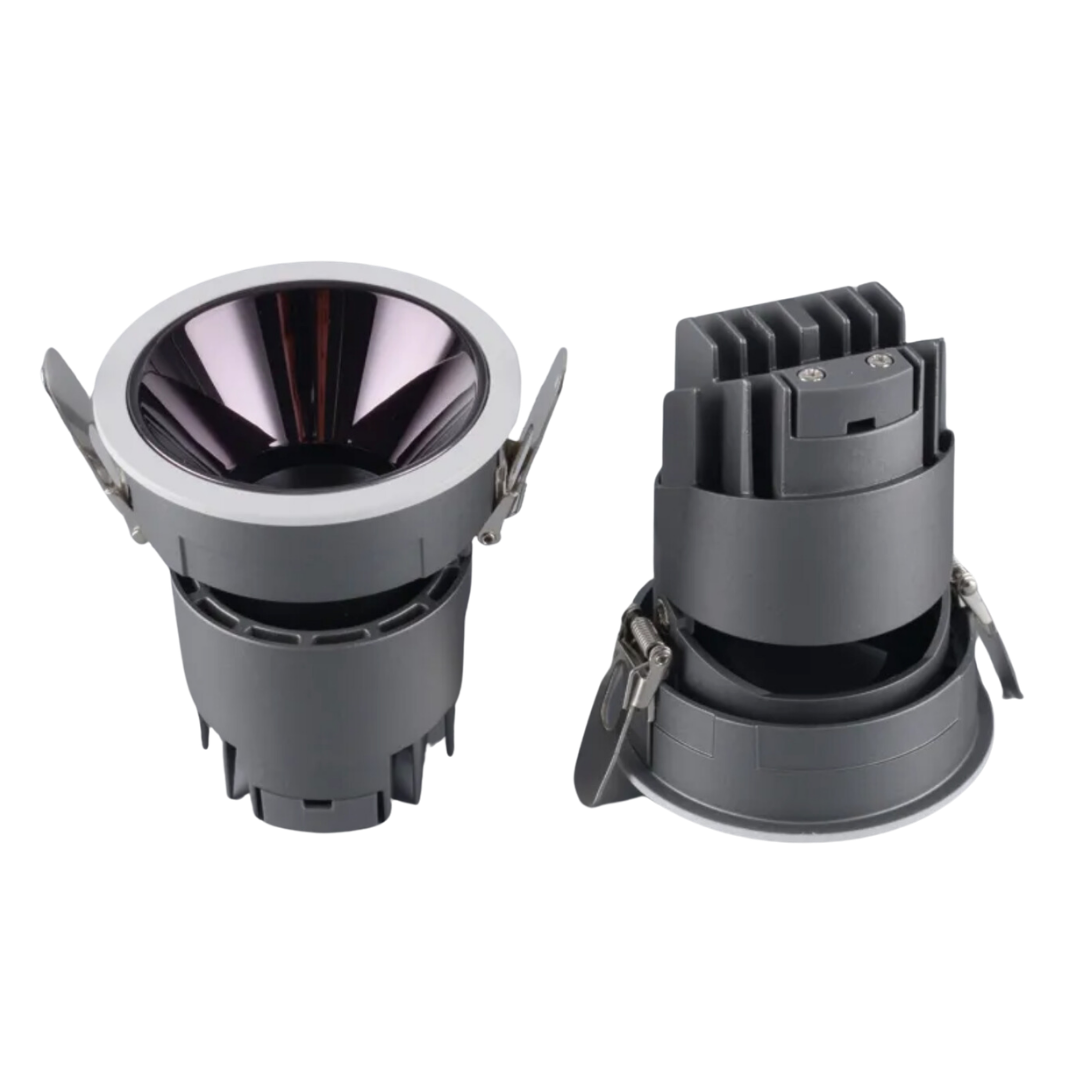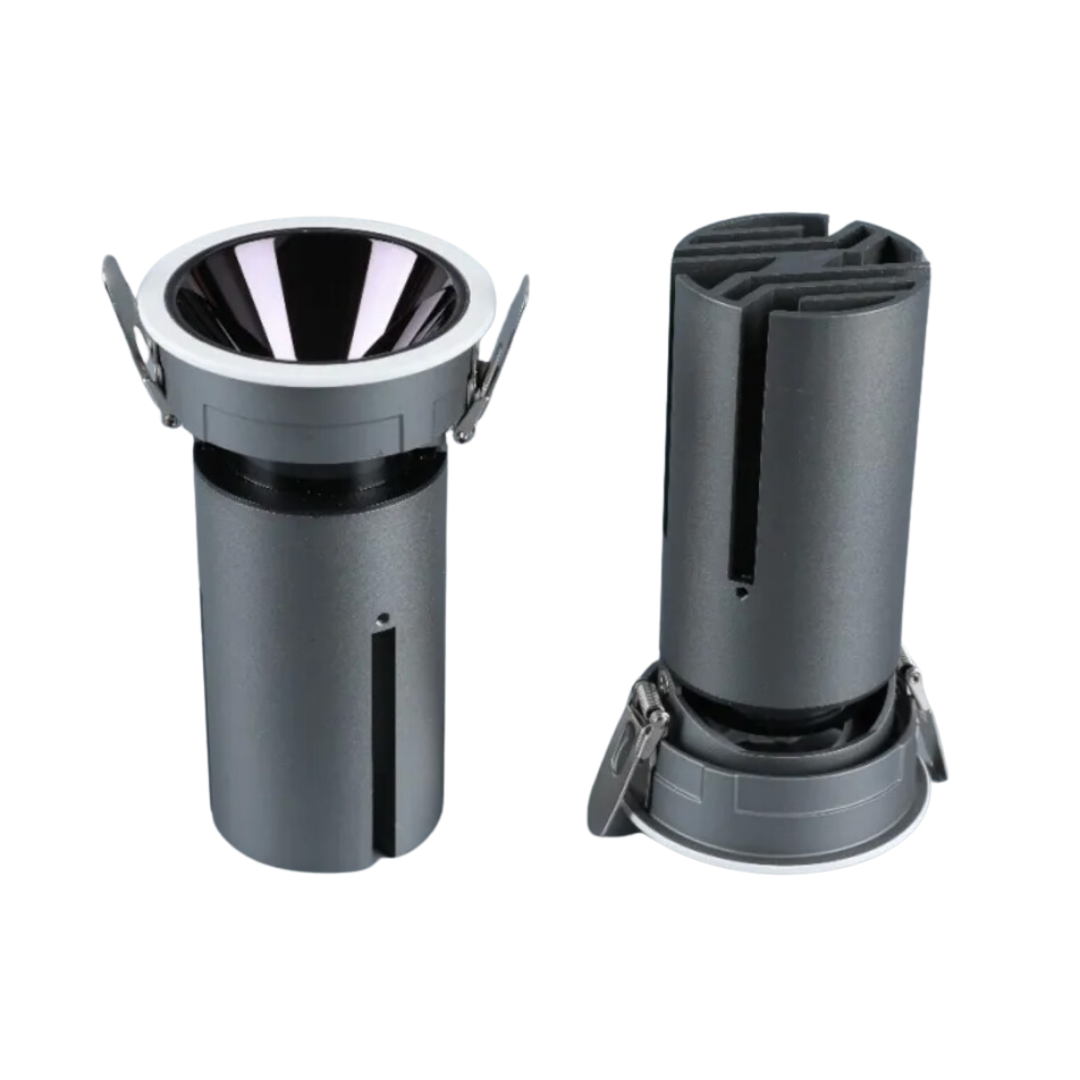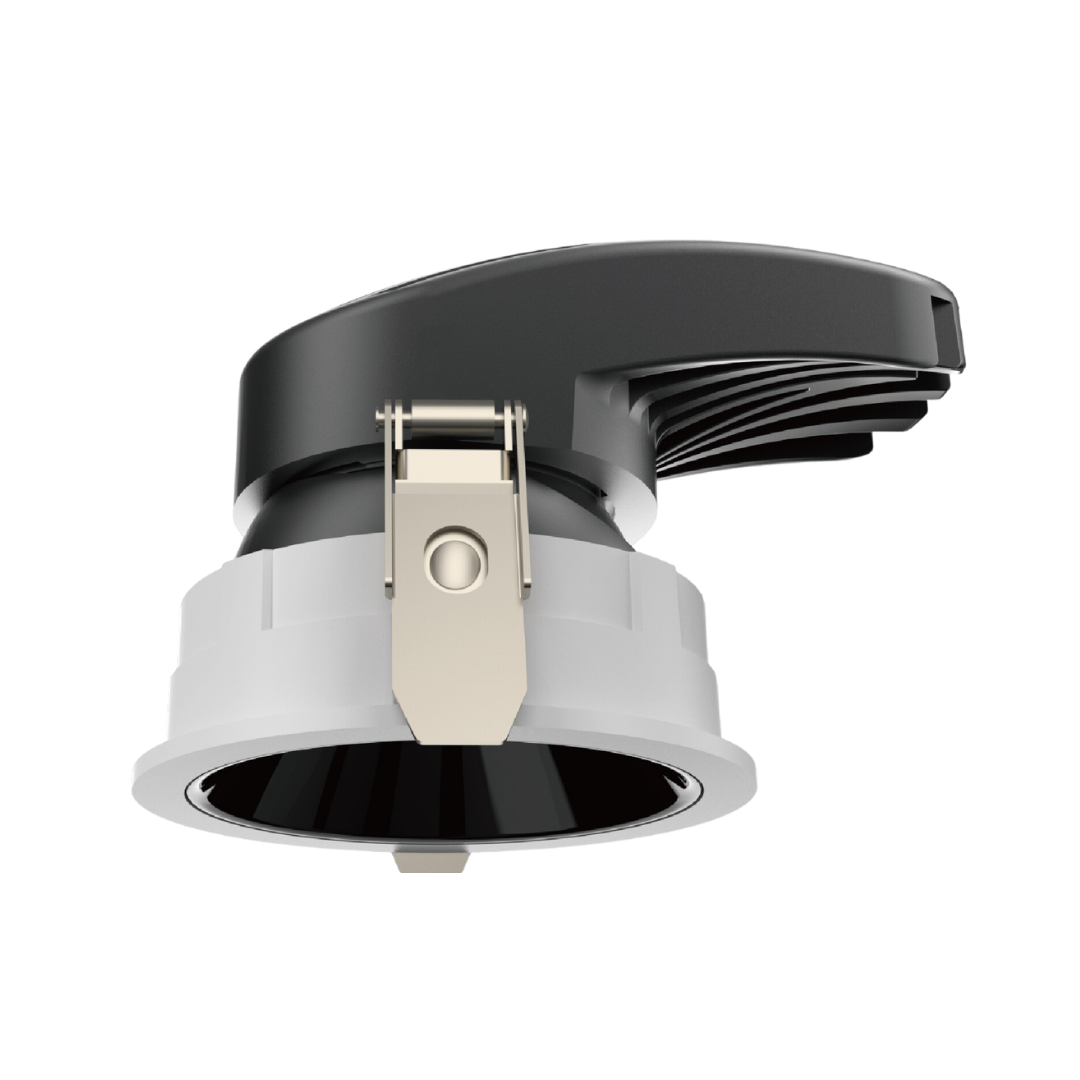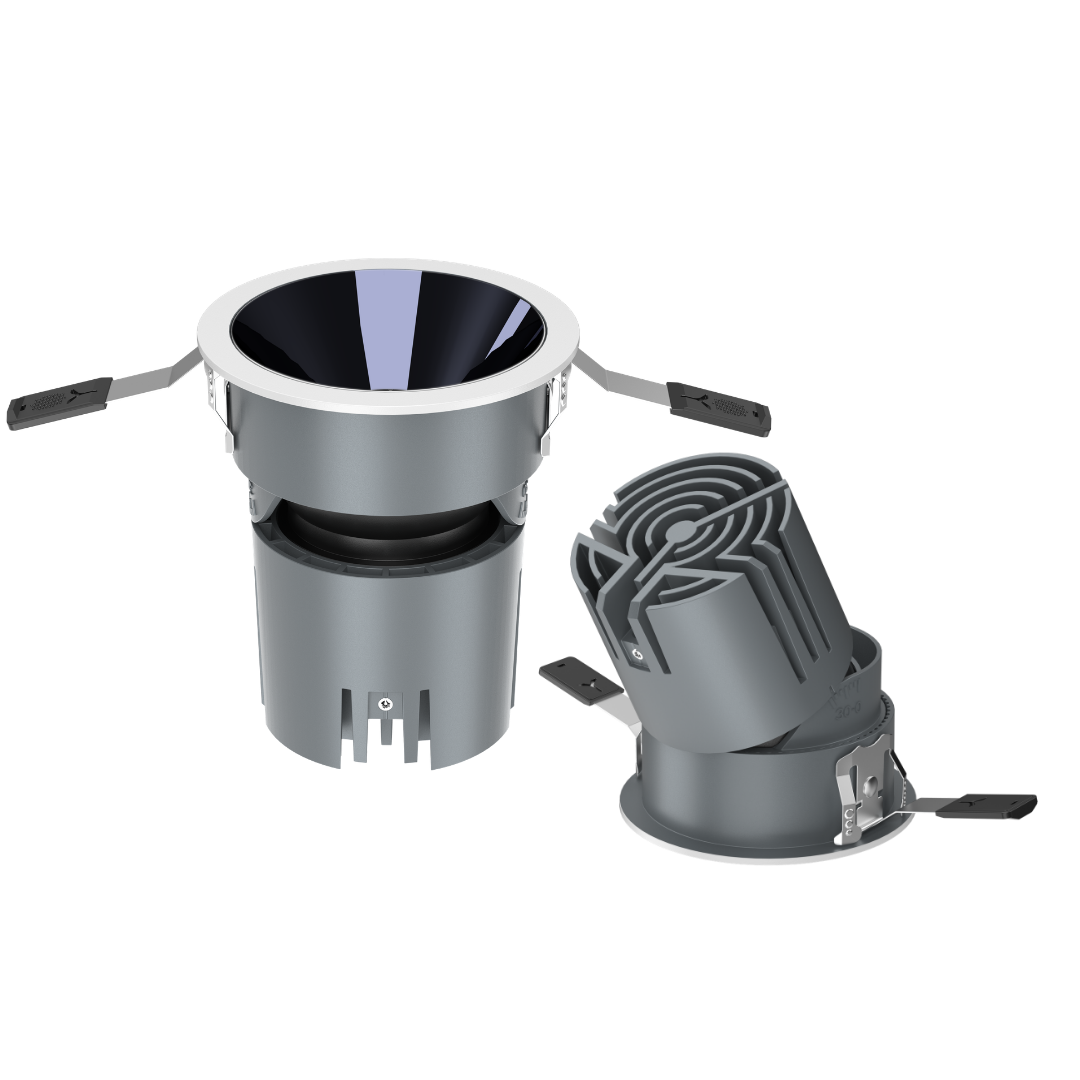
A larger optic does not automatically guarantee a better fixture, but it gives the optical designer more physical area to control light. When properly engineered, it can improve several visible aspects of the beam.
Better beam shaping
A well-designed lens or reflector directs more of the available light into the intended distribution instead of allowing uncontrolled spill.
Improved uniformity
Larger optical surfaces can create smoother transitions from the centre of the beam to the edge, reducing harsh rings and uneven patches.
More comfortable glare control
A deeper or wider optical system can shield the bright COB from normal viewing angles. Visual comfort depends on the complete geometry, not only the reflector colour.
Useful output matters more than raw lumens
Two fixtures with similar lumen ratings may perform very differently on the target surface. Beam efficiency and distribution determine how much light reaches the area that matters.
What to compare during selection
Do not judge only by wattage. Compare beam shape, centre intensity, edge quality, glare, fixture depth and the consistency of output between samples.