After-sales problems usually begin much earlier—during product selection, specification, installation or procurement. These seven checks help project teams prevent avoidable problems before material reaches the ceiling.
1. Specify the complete configuration
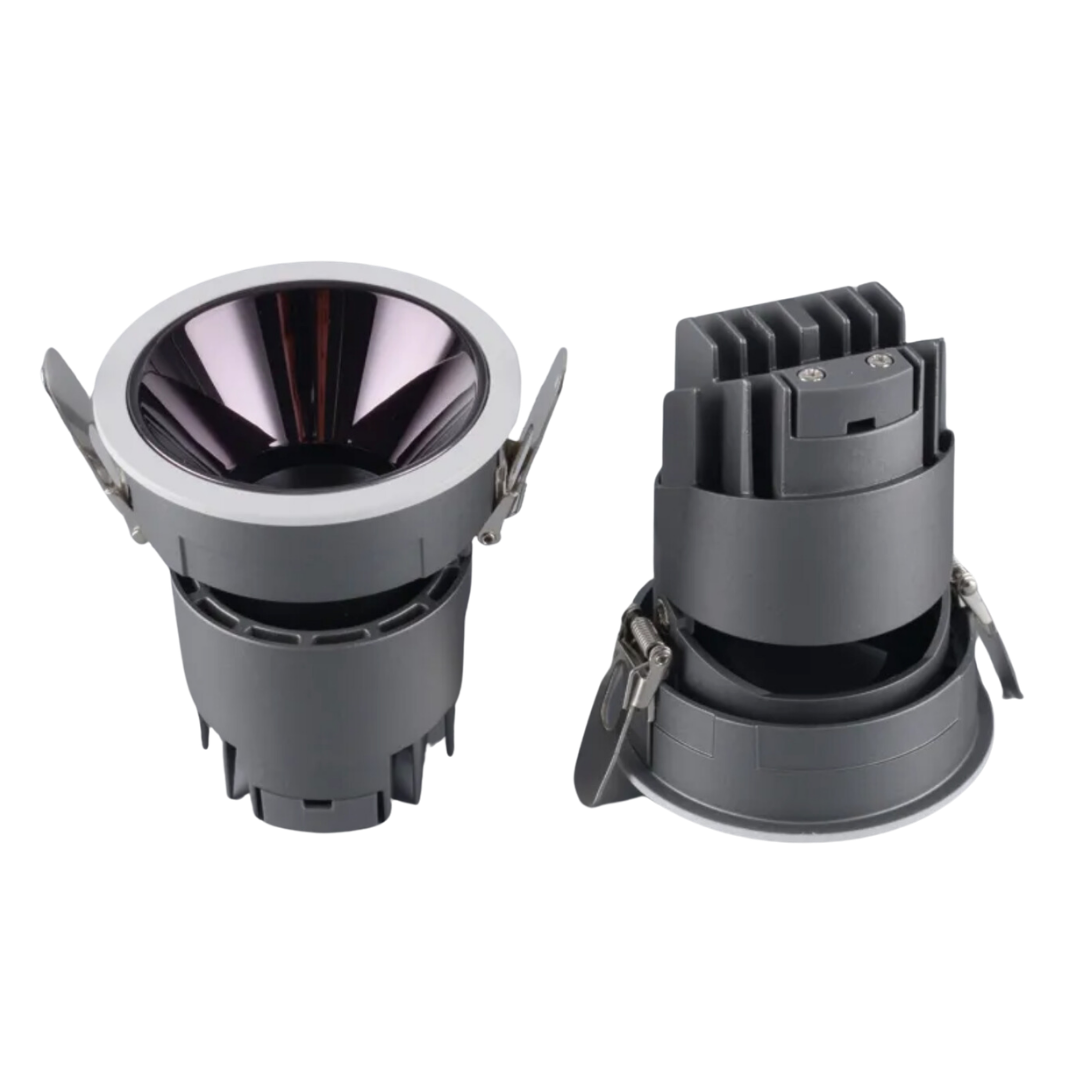
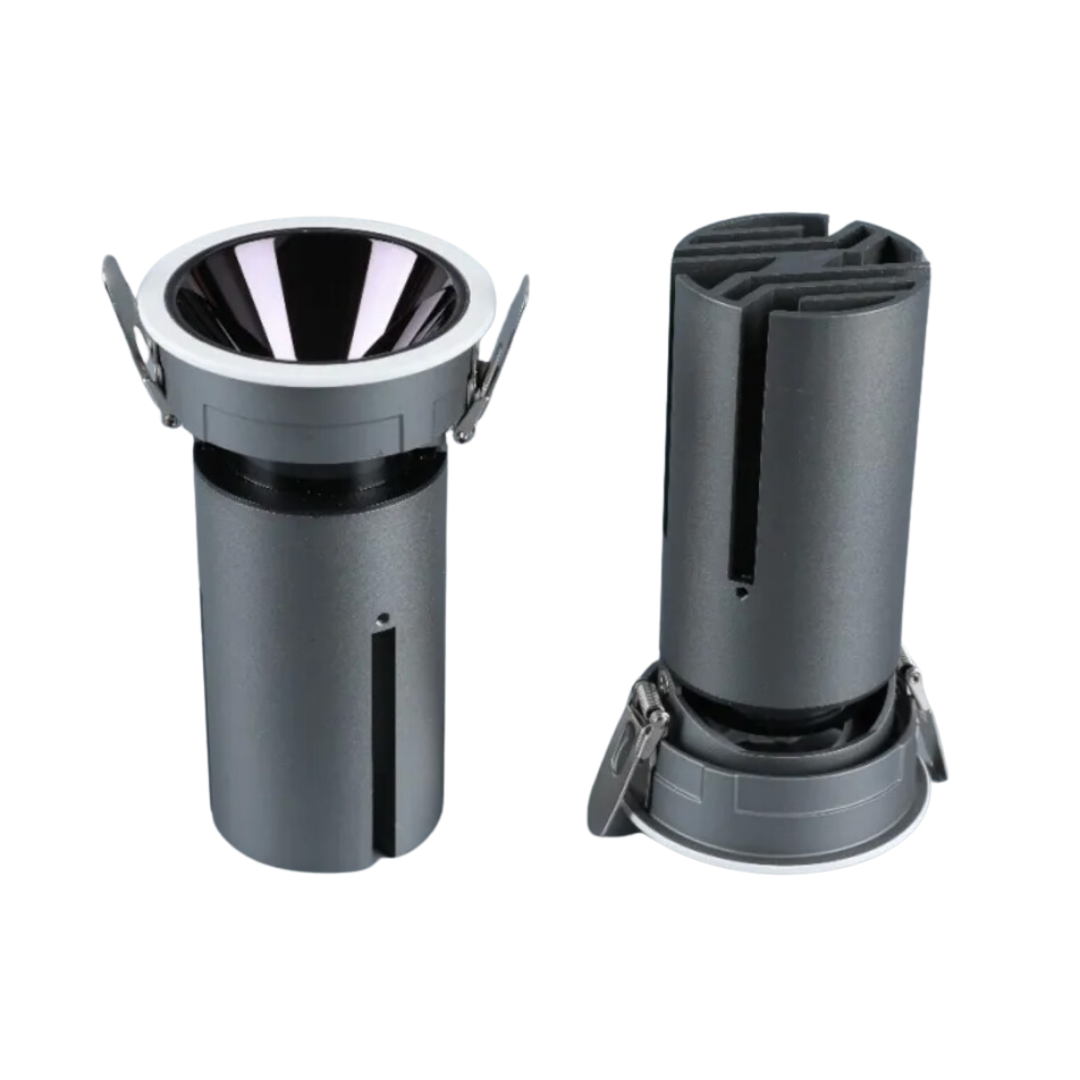
A model name and wattage are not enough. Confirm cutout, body size, beam angle, CCT, CRI, reflector, body finish, driver and installation type before production.
- Use a written specification sheet
- Approve one final sample configuration
- Avoid verbal last-minute changes
2. Match the beam to the application
A narrow beam can create excessive contrast, while a wide beam can reduce useful intensity. Select optics according to ceiling height, spacing and the visual task.
- 15° for tight accents
- 24° for controlled focus
- 36° for versatile general accent lighting
- 55° for broad, soft distribution
3. Give thermal management equal importance
LED performance depends on how effectively heat moves away from the COB and driver. A premium appearance cannot compensate for inadequate thermal design.
- Check heat-sink size and airflow
- Avoid covering drivers with insulation
- Use the correct wattage for the body
4. Standardise fixtures wherever possible
Using too many unrelated fixtures increases spare-part requirements, procurement confusion and maintenance risk. A modular family can cover several applications with fewer base components.
5. Plan front access and serviceability
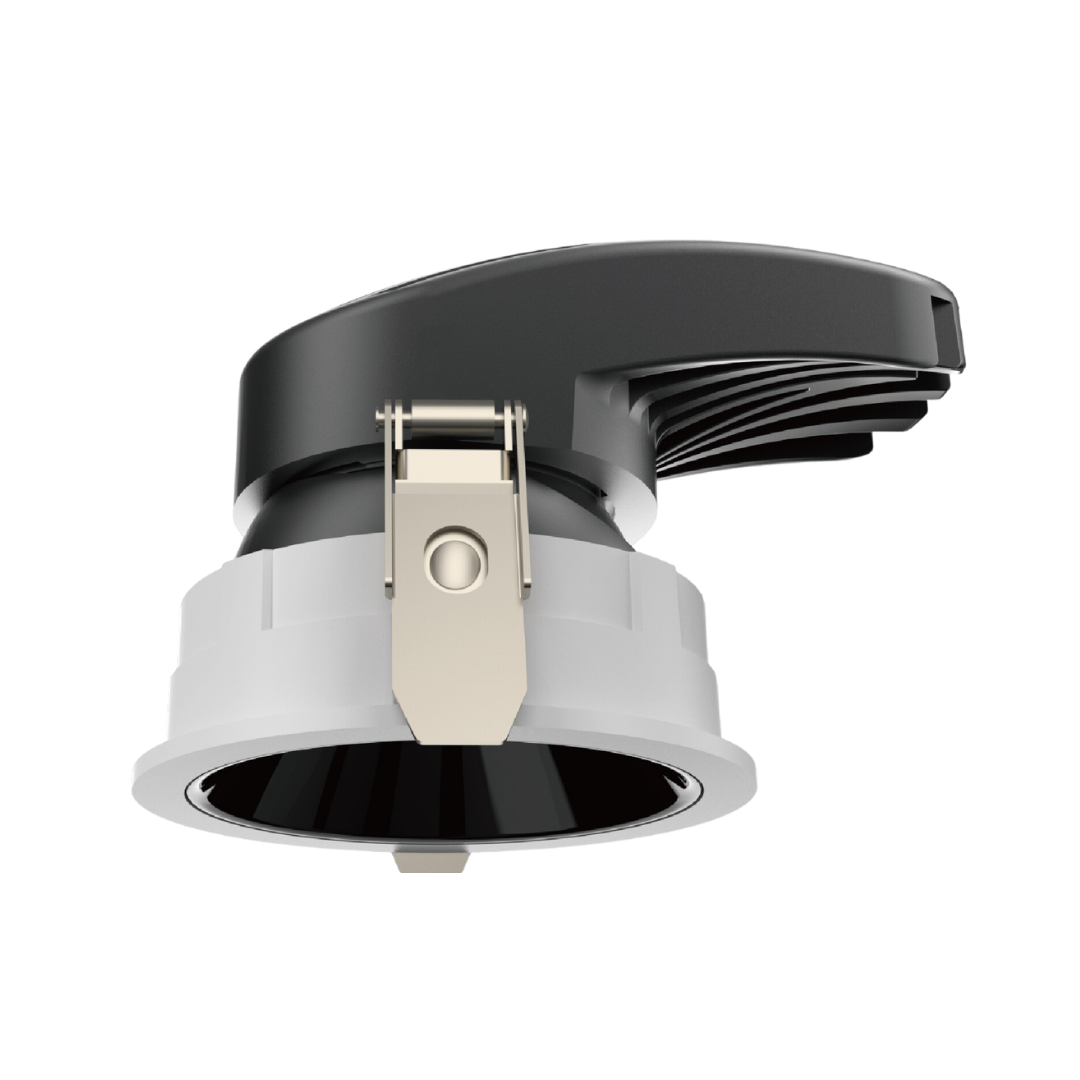
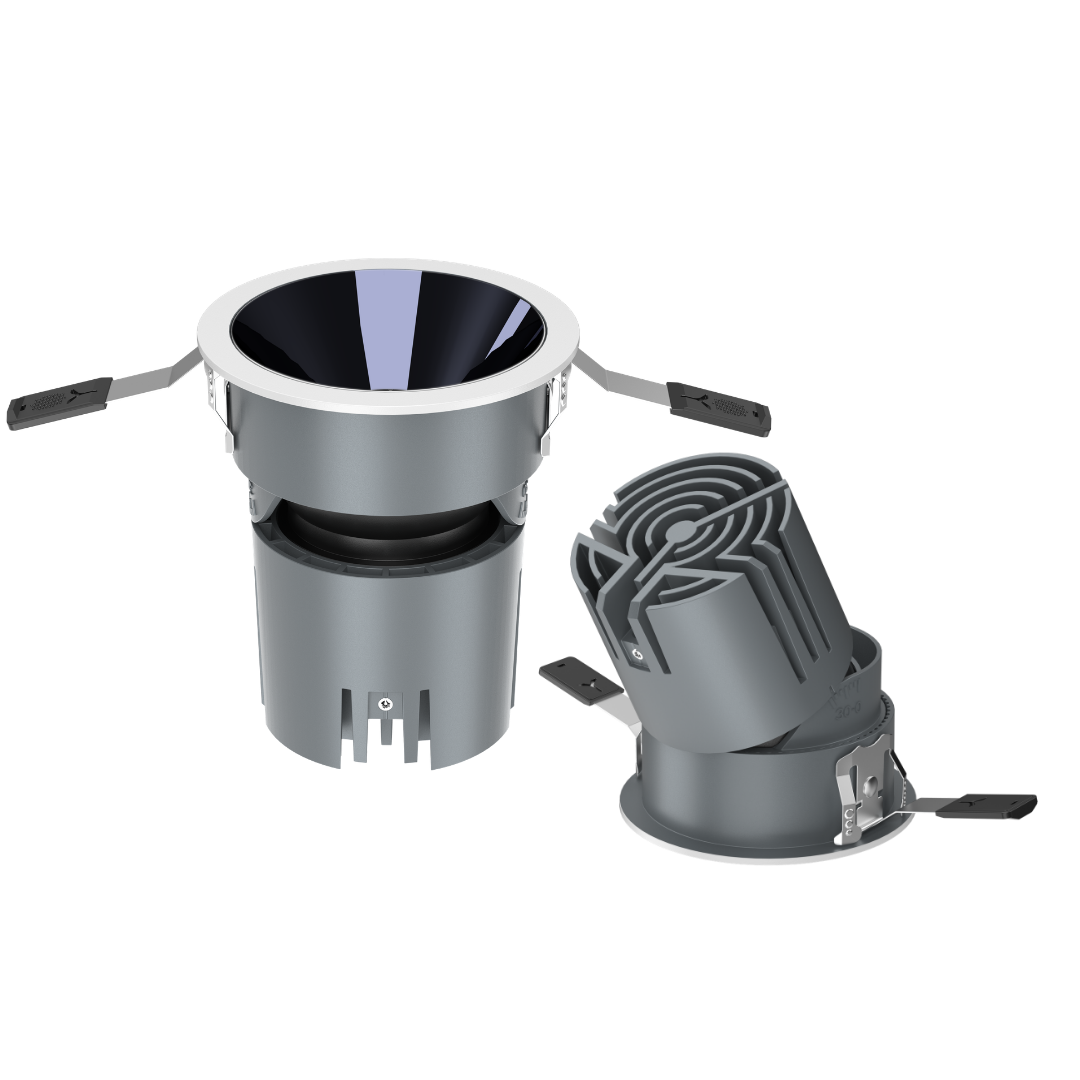
Front-openable designs can make maintenance faster and reduce ceiling damage. Consider how the fixture will be removed before approving it.
6. Protect drivers from site conditions
Voltage variation, moisture, heat and poor connections can reduce driver life. Use suitable protection and ensure clean electrical installation.
7. Keep approved spares and records
Maintain a small quantity of approved modules, drivers, reflectors and lenses. Record the exact configuration used in each area so replacements remain consistent.